


Custom Software Development: When Tailored Applications Create More Business Value Than Generic Tools
Custom software development is a strategic choice when generic tools no longer support the way a business actually works. Instead of forcing teams to adapt to fixed software limitations, a tailored application can be designed around specific workflows, data structures, user roles, approvals, integrations and operational goals.
The value of custom software is not simply that it is unique. The value appears when it reduces manual work, connects disconnected systems, improves visibility, supports better decisions and gives the business control over processes that matter. For companies with complex operations, tailored software can become a long-term operational advantage.
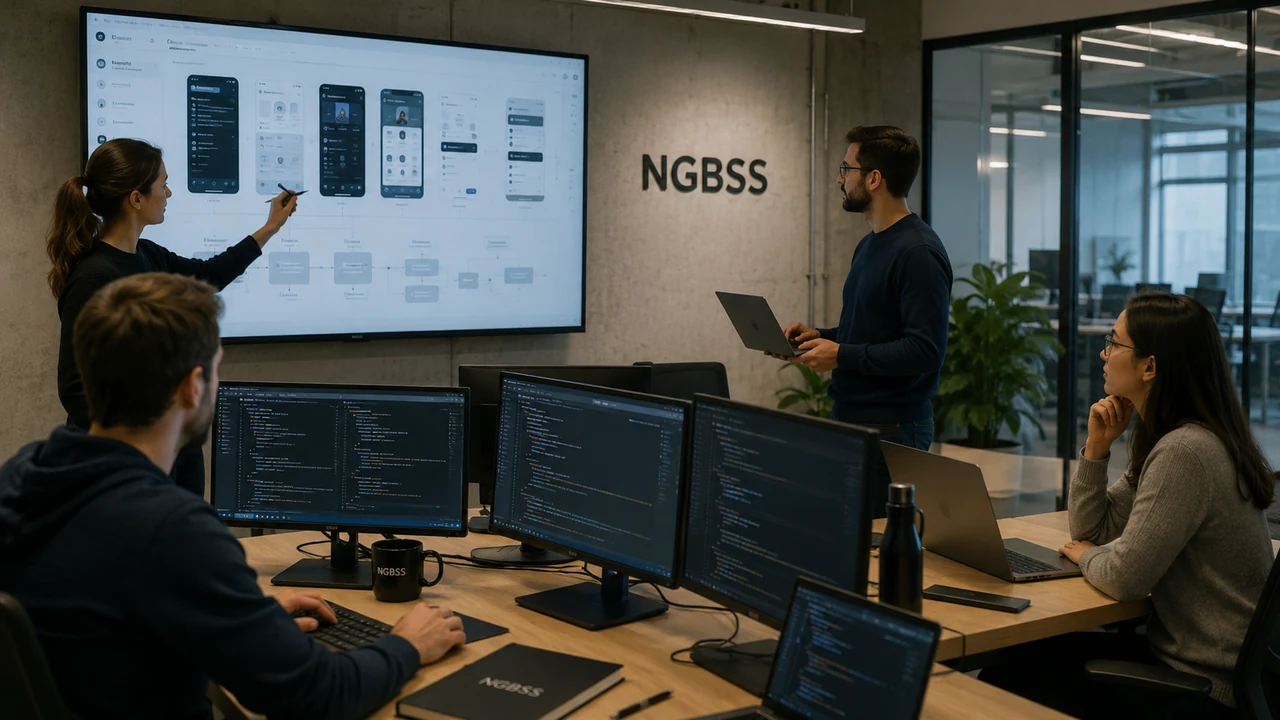
Businesses that need applications built around their own processes can use custom software development to create scalable, secure and maintainable digital systems aligned with real business workflows.
Custom software as operational differentiation
Custom software should not be viewed only as an IT project. It is an operational decision. A tailored application can shape how teams work, how data flows, how customers interact with the company and how management sees performance.
Generic tools are useful for standard processes. Custom software becomes valuable when the business has unique workflows, specialized rules, internal approvals, complex integrations or processes that create competitive advantage. In these cases, software should adapt to the business, not the other way around.
The strongest custom software projects begin with business clarity. The development team must understand the problem, the users, the workflow, the constraints and the expected measurable value.
Build vs buy: the strategic decision
The build-vs-buy decision is central to custom software development. Buying an existing product is usually faster and less expensive at the beginning. Building custom software offers more control, flexibility and alignment with specific requirements.
Buying software may be the right choice when requirements are common, the product already covers most needs and the business can adapt without major friction. Building software may be the right choice when the process is specific, integrations are complex, licensing becomes expensive or the business needs long-term control.
Decision factors include:
- workflow uniqueness;
- integration requirements;
- data ownership;
- long-term licensing costs;
- security requirements;
- scalability needs;
- speed to market;
- maintenance capacity;
- competitive differentiation.
The best answer is not always fully custom. Many businesses combine standard platforms with custom modules, integrations or automation layers.
When tailored software makes sense
Custom software makes sense when the business problem is specific enough that existing tools create friction. This friction may appear as manual work, duplicate data entry, missing reports, broken integrations, unclear ownership or operational delays.
Common signs include:
- teams rely on spreadsheets for critical workflows;
- data is copied between systems manually;
- existing tools do not support the approval process;
- management lacks real-time visibility;
- customer or partner portals are needed;
- operations depend on email-based coordination;
- the company needs custom reporting;
- multiple systems need to communicate;
- standard software forces inefficient workarounds.
Custom software should be justified by business impact, not by preference. The project should make work faster, clearer, safer or more scalable.
Discovery before development
Discovery is the phase that converts a vague idea into a structured project. It identifies the business problem, users, workflows, data, integrations, constraints and priorities. Without discovery, development starts on assumptions.
A strong discovery phase clarifies:
- who will use the application;
- what problem must be solved;
- which workflows are critical;
- what data must be captured;
- what roles and permissions are needed;
- which systems must be integrated;
- what reports are required;
- what belongs in the first version;
- what can be added later.
Discovery protects the budget by reducing unclear scope, unnecessary features and late surprises.
MVP and phased delivery
A common mistake in custom software projects is trying to build everything at once. A better approach is often to define an MVP, or minimum viable product. This first version contains the essential functionality needed to validate the workflow and start generating value.
An MVP helps the business learn from real users. It also reduces the risk of building features that are not needed. Once the first version is used, future improvements can be prioritized based on feedback, usage data and operational impact.
Phased delivery works well when the product roadmap is clear. The first version solves the core problem. Later versions improve reporting, automation, integrations, user experience and scalability.
Workflow fit and user experience
Custom software should fit the workflow, but it should also remain easy to use. A system that perfectly reflects every internal exception can become too complex. Good design simplifies work without ignoring operational reality.
User experience in business applications includes:
- clear navigation;
- simple forms;
- role-specific dashboards;
- useful notifications;
- fast access to frequent actions;
- error prevention;
- consistent terminology;
- mobile or tablet access where needed.
The goal is adoption. If users avoid the application, the project fails even if the code works.
Architecture and maintainability
Custom software must be maintainable. Maintainability depends on architecture, code quality, documentation, testing, deployment process and technology choices. A rushed application may solve the immediate problem but become expensive to change later.
Good architecture supports:
- new features;
- integration changes;
- more users;
- larger data volumes;
- performance optimization;
- security updates;
- clear separation of components;
- long-term support.
Technology should be selected for project fit, team capability and long-term ownership, not only because it is popular.
Integrations and data flow
Integrations are often where custom software creates the most value. A tailored application can connect ERP, CRM, ecommerce, payment systems, logistics platforms, accounting tools, marketing systems and internal databases.
Good integrations reduce duplicate work and create a more reliable data flow. They also require careful design. The system must define which platform is the source of truth, how data is synchronized, how errors are handled and how conflicts are resolved.
Integration areas may include:
- customer data;
- orders;
- invoices;
- inventory;
- payments;
- shipping status;
- support tickets;
- reports;
- notifications.
A fragile integration can create more problems than manual work. Reliability and error handling matter.
Security and data ownership
Custom software often handles sensitive business data. Security must be part of the project from the beginning. This includes authentication, authorization, encryption where needed, secure communication, input validation, logging, backups and environment separation.
Data ownership is another important factor. A business should know where data is stored, who can access it, how it is backed up, how it can be exported and what happens if the vendor relationship changes.
Security considerations include:
- role-based access control;
- secure authentication;
- audit logs;
- data validation;
- backup and restore;
- encrypted connections;
- dependency updates;
- administrator access policies;
- incident response planning.
Security is a continuing responsibility, not a final checklist before launch.
Cost, ROI and business value
Custom software cost depends on scope, complexity, integrations, design, security, testing, deployment and maintenance. The cheapest option is not always the most cost-effective if it creates technical debt, poor usability or unreliable integrations.
ROI should be evaluated through business outcomes:
- hours saved per month;
- errors reduced;
- faster processing time;
- better reporting;
- lower licensing dependency;
- improved customer experience;
- higher operational capacity;
- better compliance or traceability;
- new revenue opportunities.
A custom system should not be measured only by development cost. It should be measured by the value it creates over time.
Testing, deployment and adoption
Testing is essential because custom software supports real workflows. Testing should cover functionality, user roles, integrations, permissions, edge cases, performance and security. User acceptance testing is especially important because real users can reveal practical issues that technical testing may miss.
Deployment should be planned carefully. The production environment must be configured, backups must be ready, access must be controlled and a rollback option should exist where possible.
Adoption also matters. Users may need training, documentation and support. A technically correct application can still fail if the team does not understand how to use it or why it matters.
Maintenance and future roadmap
Custom software requires maintenance after launch. Business processes change, integrations evolve, security updates are needed and users request improvements. A roadmap helps keep the software aligned with business priorities.
Maintenance may include:
- bug fixes;
- security updates;
- performance optimization;
- integration monitoring;
- new features;
- user support;
- backup verification;
- technical documentation updates.
Custom software should be treated as a living asset. Without maintenance, even a good application becomes outdated.
Common custom software development mistakes
Custom projects fail when scope, ownership or technical quality are weak. Common mistakes include:
- starting without discovery;
- building too many features in the first version;
- ignoring user adoption;
- underestimating integrations;
- not defining data ownership;
- weak security planning;
- insufficient testing;
- poor documentation;
- choosing a vendor only by price;
- launching without maintenance planning.
Successful custom software requires clear scope, strong communication and long-term responsibility.
Checklist before starting custom software development
- define the business problem;
- compare build vs buy options;
- identify users and roles;
- map core workflows;
- define MVP scope;
- document integrations;
- clarify data ownership;
- define security requirements;
- plan testing and deployment;
- establish maintenance and roadmap ownership.
Frequently asked questions about custom software development
What is custom software development?
Custom software development is the process of creating software tailored to the specific workflows, data, users and requirements of a business.
When is custom software better than standard software?
It is better when standard tools cannot support specific workflows, integrations, automation needs, reporting requirements or long-term control.
Should a custom software project start with an MVP?
In many cases, yes. An MVP reduces risk by delivering the essential functionality first and allowing future improvements based on real usage.
Can custom software integrate with existing systems?
Yes. It can integrate with ERP, CRM, ecommerce, accounting, payment, logistics and internal platforms if technical access is available.
Who owns the software and data?
Ownership depends on the contract and architecture. Businesses should clarify source code, data access, hosting, export options and maintenance responsibility before development begins.
Conclusion
Custom software development is valuable when a business needs systems that match its own workflows, data, integrations and growth plans. It can reduce manual work, improve visibility, connect systems and create operational advantages that generic tools cannot provide.
The best results come from discovery, phased delivery, strong architecture, security, testing, integration planning and long-term maintenance. Professional custom software development can help businesses build tailored applications that support real processes and scale with future requirements.